Friday, 1 October 2021

A deep dive into Rolling Stone's 500 Greatest Songs Of All Time


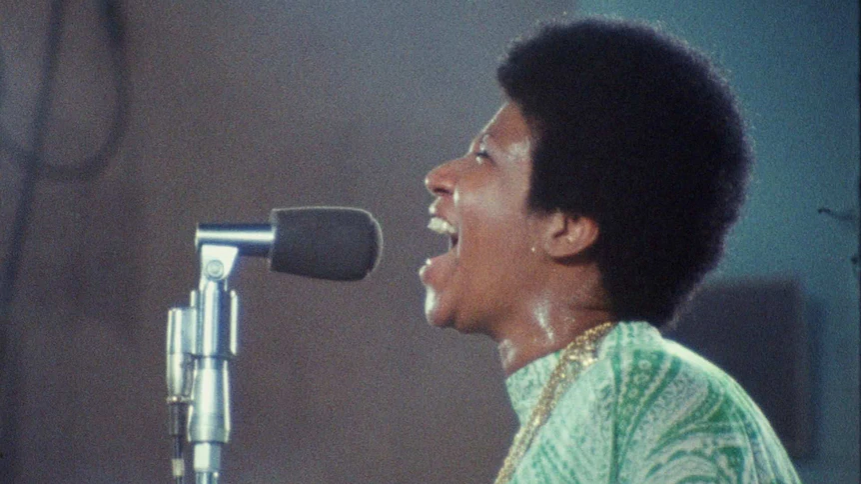
I recently wrote an analysis of Rolling Stone's recent list of the 500 Greatest Songs Of All Time, which crowned Aretha Franklin's version of Respect at #1. You can read it here.

I love these kinds of lists. It's why I'm watching the American Film Institute's Top 100 Films. It's why I helped put together a list of the 100 best songs that missed out on a spot in triple j's Hottest 100. The quantification of qualitative artforms is fascinating to me because it conjures the question "what makes this great?". I want to know why these films/songs/albums are so highly regarded, and I want to pull apart what makes one better than another. I've discovered so many cool pieces of art I'd either never heard or never properly paid attention to through these kinds of lists.

In the process of compiling the aforementioned ABC article about Rolling Stone's list, I pulled together a spreadsheet to help me make sense of it all. The spreadsheet told me all sorts of weird and wonderful things I couldn't fit into the article, and it seemed a shame to let it go to waste, so here are some cool lists from within the list.

Disclaimer: Rolling Stone first released its 500 best songs list in 2004, and did a slight update in 2010, but I've ignored the 2010 update because a) it was minor and b) the comparison between 2004 and 2021 is far more interesting.

And if you find any mistakes, please let me know so I can correct them. Thank you.

Top 10 songs from the 2004 list that didn't make the 2021 list

  1. Hound Dog - Elvis Presley (2004 position - #19)
  2. You've Lost That Lovin' Feelin' - The Righteous Brothers (#34)
  3. When A Man Loves A Woman - Percy Sledge (#54)
  4. Long Tall Sally - Little Richard (#56)
  5. The Times Are A-Changin' - Bob Dylan (#59)
  6. Whole Lotta Shakin' Goin' On - Jerry Lee Lewis (#61)
  7. For What It's Worth - Buffalo Springfield (#63)
  8. Sunshine Of Your Love - Cream (#65)
  9. California Girls - The Beach Boys (#71)
  10. Mystery Train - Elvis Presley (#77)


Top 10 eligible songs that didn't make the 2004 list that made the 2021 list

  1. Get Ur Freak On - Missy Elliott (2021 position - #8)
  2. Dreams - Fleetwood Mac (#9)
  3. Crazy In Love - Beyonce feat. Jay-Z (#16)
  4. Strange Fruit - Billie Holiday (#21)
  5. A Case Of You - Joni Mitchell (#26)
  6. Once In A Lifetime - Talking Heads (#28)
  7. Juicy - Notorious B.I.G. (#32)
  8. Seven Nation Army - The White Stripes (#36)
  9. B.O.B. - Outkast (#39)
  10. Idioteque - Radiohead (#48)

Top 10 biggest improvers

  1. Nuthin' But A 'G' Thang - Dr Dre feat. Snoop Doggy Dogg (390 spots, from #419 to #29)
  2. Kiss - Prince (376 spots, from #461 to #85)
  3. Just Like Heaven - The Cure (375 spots, from #483 to #108)
  4. I Feel Love - Donna Summer (359 spots, from #411 to #52)
  5. Tiny Dancer - Elton John (340 spots, from #387 to #47)
  6. Tumbling Dice - The Rolling Stones (338 spots, from #424 to #86)
  7. Super Freak - Rick James (324 spots, from #477 to #153)
  8. Fight The Power - Public Enemy (320 spots, from #322 to #2)
  9. More Than A Feeling - Boston (288 spots, from #500 to #212)
  10. Young Americans - David Bowie (277 spots, from #481 to #204)

Top 10 biggest drops (while still making the cut in 2021)

  1. Help! - The Beatles (418 spots, from #29 to #447)
  2. Crying - Roy Orbison (392 spots, from #69 to #461)
  3. Summertime Blues - Eddie Cochran (359 spots, from #73 to #432)
  4. House Of The Rising Sun - The Animals (349 spots, from #122 to #471)
  5. California Dreamin' - The Mamas & The Papas (331 spots, from #89 to #420)
  6. Heartbreak Hotel - Elvis Presley (302 spots, from #45 to #347)
  7. Go Your Own Way - Fleetwood Mac (282 spots, from #119 to #401)
  8. Light My Fire - The Doors (275 spots, from #35 to #310)
  9. Hotel California - The Eagles (262 spots, from #49 to #311)
  10. Up On The Roof - The Drifters (262 spots, from #113 to #375)

Top 10 smallest movers between 2004 and 2021

  1. Be My Baby - The Ronettes (no change, #21)
  2. Lose Yourself - Eminem (one spot, from #166 to #167)
  3. Tangled Up In Blue - Bob Dylan (one spot, from #68 to #67)
  4. I Want To Hold Your Hand - The Beatles (one spot, from #16 to #15)
  5. Good Golly, Miss Molly - Little Richard (two spots, from #94 to #92)
  6. A Day In The Life - The Beatles (two spots, from #26 to #24)
  7. What's Going On - Marvin Gaye (two spots, from #4 to #6)
  8. Sweet Dreams (Are Made Of This) - The Eurythmics (three spots, #356 to #353)
  9. Proud Mary - Creedence Clearwater Revival (three spots, #155 to #152)
  10. Like A Rolling Stone - Bob Dylan (three spots, #1 to #4)

Top 10 of the 2010s

  1. Dancing On My Own - Robyn (#20)
  2. Runaway - Kanye West feat. Pusha T (#25)
  3. Royals - Lorde (#30)
  4. Alright - Kendrick Lamar (#45)
  5. Gasolina - Daddy Yankee (#50)
  6. All Too Well - Taylor Swift (#69)
  7. Formation - Beyonce (#73)
  8. Rolling In The Deep - Adele (#82)
  9. Hold On, We're Going Home - Drake feat. Majid Jordan (#129)
  10. Thank U, Next - Ariana Grande (#137)


Top 10 of the 2000s

  1. Get Ur Freak On - Missy Elliot (#8)
  2. Hey Ya! - Outkast (#10)
  3. Crazy In Love - Beyonce feat. Jay-Z (#16)
  4. Seven Nation Army - The White Stripes (#36)
  5. B.O.B. - Outkast (#39)
  6. Paper Planes - M.I.A. (#46)
  7. Idioteque - Radiohead (#48)
  8. Work It - Missy Elliott (#56)
  9. Back To Black - Amy Winehouse (#79)
  10. All My Friends - LCD Soundsystem (#87)


Top 10 of the '90s

  1. Smells Like Teen Spirit - Nirvana (#5)
  2. Nuthin' But A 'G' Thang - Dr Dre feat. Snoop Doggy Dogg (#29)
  3. Juicy - The Notorious B.I.G. (#32)
  4. Doo Wop (That Thing) - Lauryn Hill (#49)
  5. One - U2 (#62)
  6. Common People - Pulp (#75)
  7. I Will Always Love You - Whitney Houston (#94)
  8. Wonderwall - Oasis (#95)
  9. You Oughta Know - Alanis Morissette (#103)
  10. C.R.E.A.M. - Wu-Tang Clan (#107)

Top 10 of the '80s

  1. Fight The Power - Public Enemy (#2)
  2. Purple Rain - Prince (#18)
  3. Once In A Lifetime - Talking Heads (#28)
  4. When Doves Cry - Prince (#37)
  5. Love Will Tear Us Apart - Joy Division (#41)
  6. Redemption Song - Bob Marley & The Wailers (#42)
  7. Billie Jean - Michael Jackson (#44)
  8. Like A Prayer - Madonna (#55)
  9. The Message - Grandmaster Flash & The Furious Five (#59)
  10. Running Up That Hill - Kate Bush (#60)


Top 10 of the '70s

  1. What's Going On - Marvin Gaye (#6)
  2. Dreams - Fleetwood Mac (#9)
  3. Superstition - Stevie Wonder (#12)
  4. Bohemian Rhapsody - Queen (#17)
  5. Imagine - John Lennon (#19)
  6. Heroes - David Bowie (#23)
  7. A Case Of You - Joni Mitchell (#26)
  8. Born To Run - Bruce Springsteen (#27)
  9. Tiny Dancer - Elton John ( #47)
  10. I Feel Love - Donna Summer (#52)

Top 10 of the '60s

  1. Respect - Aretha Franklin (#1)
  2. A Change Is Gonna Come - Sam Cooke (#3)
  3. Like A Rolling Stone - Bob Dylan (#4)
  4. Strawberry Fields Forever - The Beatles (#7)
  5. God Only Knows - The Beach Boys (#11)
  6. Gimme Shelter - The Rolling Stones (#13)
  7. Waterloo Sunset - The Kinks (#14)
  8. I Want To Hold Your Hand - The Beatles (#15)
  9. Be My Baby - The Ronettes (#22)
  10. A Day In The Life - The Beatles (#24)

Top 10 of the '30s, '40s & '50s

  1. Strange Fruit - Billie Holiday (#21)
  2. Johnny B. Goode - Chuck Berry (#33)
  3. Tutti Frutti - Little Richard (#35)
  4. I Walk The Line - Johnny Cash (#76)
  5. What'd I Say - Ray Charles (#80)
  6. Good Golly, Miss Molly - Little Richard (#92)
  7. Maybellene - Chuck Berry (#102)
  8. That'll Be The Day - Buddy Holly & The Crickets (#124)
  9. Blueberry Hill - Fats Domino (#147)
  10. I'm So Lonesome I Could Cry - Hank Williams (#165)

Top 10 non-UK/non-US acts

  1. Dancing On My Own - Robyn (#20, Sweden)
  2. A Case Of You - Joni Mitchell (#26, Canada)
  3. Royals - Lorde (#30, New Zealand)
  4. Redemption Song - Bob Marley & The Wailers (#42, Jamaica)
  5. The Weight - The Band (#58, Canada*)
  6. Hallelujah - Leonard Cohen (#74, Canada)
  7. You Oughta Know - Alanis Morissette (#103, Canada)
  8. Hold On, We're Going Home - Drake feat. Majid Jordan (#129, Canada)
  9. No Woman, No Cry - Bob Marley & The Wailers (#140, Jamaica)
  10. Nothing Compares 2 U - Sinead O'Connor (#184, Ireland)

* The Band featured one American, but are four-fifths Canadian
Note: Puerto Rican singer Daddy Yankee reached #50, which would make him fifth on this list, but technically Puerto Rico is an American territory.
Note 2: Exclude Canada from the list and Get Up, Stand Up by Bob Marley & The Wailers (#260, Jamaica), King Tubby Meets The Rockers Uptown by Augustus Pablo (#266, Jamaica), The Boys Are Back In Town by Thin Lizzy (#272, Ireland), Pressure Drop by Toots & The Maytals (#278, Jamaica), and Never Tear Us Apart by INXS (#282, Australia) complete the list.

Top 10 best years of music

1. 1971 (22 entries)
2. 1965 (20)
3. 1972 and 1970 (19)
5. 1977 (18)
6. 1967 (17)
7. 1968 (16)
8. 1973 (15)
9. 1969 (14)
10. 1975 (13) 

Top 10 best years of music excluding the '60s and '70s

1. 1994 (12)
2. 1980 (11)
3. 1992 and 1982 (10)
5. 2003, 1988, 1987 and 1983 (9)
9. 1991 and 1984 (8)

Thanks for reading, fellow music nerds.

AFI #44: The Philadelphia Story (1940)

This is a version of a review airing on ABC Radio Ballarat and South West Victoria on October 1, 2021 and ABC Central Victoria on October 4, 2021.

This is part of a series of articles reviewing the American Film Institute's Top 100 Films, as unveiled in 2007. Why am I doing this? Because the damned cinemas were closed and I had to review something, and now I can't stop until I finish.

(PG) ★★★

Director: George Cukor.

Cast: Katherine Hepburn, Cary Grant, James Stewart, Ruth Hussey, John Howard, Roland Young, John Halliday, Mary Nash, Virginia Weidler, Henry Daniell. 

The photographer was hiding in a posy of rhododendrons.

Some things age well - good wines, certain cheeses, Buster Keaton's The General, the music of David Bowie.

Some things do not age well, and The Philadelphia Story is on that list.

It's a great pity. It's triumvirate of stars - Hepburn, Grant, Stewart - is among the best that ever was and ever will be. And all three are great in this "quintessential screwball comedy" as it's often labelled. You know you've got a killer cast at the top of their game when a low-key Cary Grant is third fiddle.

But so much of the film has aged so poorly. Much of its humour requires a century-old dictionary and an understanding of social graces in the '30s/'40s, the sexual politics are cringingly out of date, the domestic violence jokes are sickening these days, and all of these factors ensure the weird first act really grinds. 

The story follows reporter Macaulay Connor (Stewart) and his photographer girlfriend Liz Imbrie (Hussey) as they prepare to cover the "wedding of the year" between upper class socialite Tracy Lord (Hepburn) and mining magnate George Kittredge (Howard). Thanks to some blackmail from their editor Sidney Kidd (Daniell) and some assistance from Tracy's ex-husband CK Dexter Haven (Grant), Macaulay and Liz end up staying with the Lord family as the big day approaches by posing as friends of an absent son, though their ruse is soon discovered. What happens next is a tangled web of self-discovery and analysis as people reveal their true feelings for each other.


A lot of the films on this list have captured a snapshot of a particular time and place which has stopped them from ageing, like a bug in amber. Either that or their messages have remained relevant, or their techniques have been indisputably influential. But The Philadelphia Story doesn't do any of those things. As a snapshot of an era and peoples, it's so exaggerated and small scale that it makes the film largely inscrutable these days. The class war hinted as never seems to go anywhere or say anything, and the humour of it all is lost in translation some 80 years later. It's only its pointed digs at the tabloid media that work, but even those are unbalanced and overblown.

It's influence is limited to being a great example of a mostly dead genre - the screwball comedy. 1001 Movies You Must See Before You Die labels it "the uncontested classic of all sophisticated slapstick comedies". Not on my watch. As far as slapstick, there are half a dozen superior Chaplin and Keaton flicks that are better, and as for screwball, Some Like It Hot leaves it for dead, and I'm hopeful It Happened One Night and Bringing Up Baby still hold up. 

The opening scene, which ends with Grant shoving Hepburn's face and pushing her to the ground, was supposedly hilarious in 1940 but is now diabolical. Two text books I own praise it for its wordless effectiveness, and while it is a prime example of the "show, don't tell" adage, its portrayal of casual domestic violence leaves a bad taste.


The first half is utterly bizarre - the Lord family knows what's going on in terms of the blackmail and act like a bunch of eccentrics, somehow thinking this will make for a good portrayal in the magazine Macaulay and Liz work for. There are a few good one-liners in there (mostly anything Liz says) but it predominantly falls flat. There's also a horrible section in the middle of the film where every key male character lines up to tell Tracy what's wrong with her, including her caddish father who excuses his infidelity as a necessary part of ageing for men.

These are the bad points. Outweighing them just enough to save the film from being a total chore are the performances, some whipsmart dialogue, and a second half that's far funnier, more enjoyable, and less forced. Sure, no one acts or talks like a real person most of the time, but The Philadelphia Story finds a new groove in the final hour that becomes infectious.


Key to it is a wonderfully drunken scene involving Grant and Stewart, followed by an intoxicated rendezvous between Stewart and Hepburn. All three actors give magnificent performances, and it seems the film's place in history is largely linked to having these icons sharing the screen. The dialogue is delicious in places, and they devour every snooty, haughty, judgey line of it.

At best, The Philadelphia Story is a tribute to these three performers, flying at the top of their game, and perhaps it can be regarded as a vague examination of the class wars and sexual politics of the '30s and '40s. But without its trio of legends, a few well-placed zingers, and some pretty patter, The Philadelphia Story would likely be long forgotten, lost in a mist of ideas and behaviours that have aged like a banana left in the sun.

Friday, 24 September 2021

REWIND REVIEW: Death At A Funeral (2007)

Check out a far superior audio version of this review! I chat with Jono Pech about the film for his podcast Comedy Rewind.


(M) ★★★★

Director: Frank Oz

Cast: Matthew Macfadyen, Rupert Graves, Andy Nyman, Kris Marshall, Peter Dinklage, Keeley Hawes, Daisy Donovan, Alan Tudyk, Ewen Bremner, Peter Vaughan, Thomas Wheatley, Jane Asher, Peter Egan.

"Everyone stop what you're doing - it's time for the dancing girls."

It's a pretty good sign when your film is remade three times within three years of its release. Such is the excellence and translatability of the situations at the heart of Death At A Funeral, a wonderful ensemble comedy that doesn't get the dues it deserves.

The script's power lies partly in its brevity. Cut off the opening and end credits and it's barely 80 minutes. But within that hour-and-twenty there isn't a wasted second. Every character is set up with disarming ease, every catastrophe piles on top of the previous one in breathless fashion, and the gags come so thick and fast they have a better strike rate than Glenn Maxwell in a T20.

The titular funeral is the backdrop for sibling rivalry, money woes, disapproving in-laws, shunned suitors, hypochondriacs, grumpy old men, unintentional drug intake, posthumous secrets, and a spot of blackmail. There are so many opportunities for high-tension jokes that it's actually amazing it all fits into 80 minutes. The breakneck pace only adds to the comic timing. 


The cast is uniformly excellent, though the standout is of course Alan Tudyk as the accidentally drug-addled Simon. He steals so many scenes he walks off with the whole movie. The performance is all the more masterful due to the American actor not only taking the escalating absurdity in his stride, but delivering it all in a note-perfect British accent. 

Similarly impressive is Peter Dinklage, who has to portray an even more intense brain-frying trip, but with the added layers of being a secret lover in a delicate and somewhat heartbreaking situation. He and the script walk a fine line in keeping his character sympathetic, while also balancing the laughs.

There are some roles that feel underdone - Asher's grieving widow and Hawes' despairing wife are prime examples - but the humour derived from the lightning pace means these are sacrifices for the greater good. Credit goes to writer Dean Craig for his no-frills script, but also Frank Oz, who ensures the pace never flags. Oz seems to specialise in under-rated comedies like this - see also Dirty Rotten Scoundrels, In & Out and Bowfinger - but this may be the best of his funny films. 

Some of it feels a little cliched now. How many comedies have a sweary old guy/accidental drug trip/disapproving mother-in-law, but these Old Reliables are delivered so perfectly it's of little concern. Death At A Funeral is a timeless comedy that's as funny now as it was when it was released.

Shang-Chi & The Legend Of The Ten Rings

This is a version of a review airing on ABC Radio Ballarat and South West Victoria on September 17, 2021.

(M) ★★★½

Director: Destin Daniel Cretton.

Cast: Simu Liu, Tony Leung, Awkwafina, Meng'er Zhang, Fala Chen, Florian Munteanu, Benedict Wong, Michelle Yeoh, Ben Kingsley, Ronny Chieng, Yuen Wah, Jodi Long.

The Marvel movies ranked - read it here.

Scorpion vs Subzero right?

Marvel goes martial arts. 

That's the review. 

You into that? Cool, you'll love the shit out of this. That doesn't float your boat? Walk away now. Go see Respect.

Obviously there's more to it than that, much like how Shang-Chi was created in 1972 to cash in on the growing popularity of Bruce Lee and shows like Kung Fu, but grew into being much more. This is ultimately a story of family, but not in the now-cliched Fast & Furious way. It's a bit more complicated than that (thankfully), but it does its source material and its cultural representation proud.

Simu Liu is Shaun, a San Francisco valet who spends his downtime getting drunk at karaoke bars with bestie/co-worker Katy (Awkwafina). One crazy bus fight later, and Shaun has to reveal his true identity - he is Shang Chi, the warrior son of an evil and immortal crimelord, and he's about to great drawn into a mystical battle for the ages.


For those that don't know, Shang Chi was created by Marvel to cash in on a trend in the '70s, but became a fully fledged and important character in the comic books, especially in the last 20 years. Now the "world's greatest martial artist" is on the big screen, and the film does a pretty good job of living up to that idea.

Unfortunately, the story of the first half of the film doesn't make a huge amount of sense, but it does allow for some cracking set-pieces. The bus fight (which would do Jackie Chan proud) , a gorgeous-looking wuxia battle in a mystical forest, and a punch-on dangling from high-rise scaffolding are awesome and far more impressive than the climactic special FX fest. 

However, while the fights get less impactful, the story goes up a notch. This is largely thanks to Leung as Wenwu, Shang Chi's father. Wenwu is far from a cut-and-dried baddie. He does horrible things but is also hugely sympathetic, almost to the point where his reputation for evil seems disproportionate. The family ties and troubles between Wenwu and his children Shang Chi and Xialing (Zhang) are nicely balanced, upping the stakes as the film turns up the CG.

The idea that this will do for Asian representation what Black Panther did for African representation is noble and welcome. It's also well handled, and visually it makes for a stunningly beautiful film. Marvel is continuing to find new ways to explore old territory, and if nothing else, this feels and looks fresh because of its Asian spin. 

As for its place in the MCU, there are some nice cameos, including a couple of very unexpected ones.  One of these guest spots even tries to right some wrongs of Marvel and the MCU's past, which is, again, noble and welcome. Aside from this cameo, the film largely stands alone.

After the likes of Endgame and Infinity War, everything still feels like a bit of a let down, but Shang Chi is great fun if you don't try to measure it against those impossible benchmarks. It's action is superb, it looks wonderful, and Simu Liu is a revelation. Sure it has some wonky dialogue, the plot early on doesn't hold up to scrutiny, and the latter fights can't match the early ones, but the film is highly enjoyable, and Shang Chi is a very welcome addition to Marvel's mega-franchise.

Sunday, 19 September 2021

AFI #43: Midnight Cowboy (1969)

This is a version of a review airing on ABC Radio Ballarat and South West Victoria on September 17, 2021.

This is part of a series of articles reviewing the American Film Institute's Top 100 Films, as unveiled in 2007. Why am I doing this? Because the damned cinemas were closed and I had to review something, and now I can't stop until I finish.

(M) ★★★★★

Director: John Schlesinger.

Cast: Dustin Hoffman, Jon Voight, Sylvia Miles, John McGiver, Brenda Vaccaro, Barnard Hughes, Ruth White, Jennifer Salt, Bob Balaban.

The candidates for the new season of The Bachelor left something to be desired.

What is Midnight Cowboy really about, aside from being an unremittingly bleak tale about a naive gigolo and a sick grifter trying to make their way in New York?

Is it about the death of the American dream? Is it a profile of the American "underclass" circa the late '60s in the Big Apple? Or is it a portrait of true friendship and humanity in the face of depravity, destitution and ultimately death? 

It is all of these things and more.


Amir Abou-Jaoude, reviewing it for its 50 anniversary in the Stanford Daily, called it "a seismic shift in the American imagination" that "attends to the grime and crime in New York City (and) compels us to pay attention to people who would ordinarily be overlooked". It also shoots down the great American archetype of the cowboy, with Abou-Jaoude gleefully noting Midnight Cowboy won the best film Oscar in the same year John Wayne won best actor for True Grit.

Indeed, there are no such Duke-like heroes here. The cowboy Joe Buck (Voight) heads east to New York in the hopes of finding rich women to fuck for money. From the moment he arrives, he is obviously a fish out of water, and very soon he's drowning - 40 minutes into the film, Joe is poor, broke, pale and looking to suck dick for chump change.

The idea of the cowboy being America, on a quest for the unholy double of sex and money, only to end up emasculated and destitute is too good a piece of symbolism to pass up. It's one of the best pieces of state-of-the-nation social commentary you could find.

Not everyone agreed (Roger Ebert called it "a good movie with a masterpiece inside, struggling to break free") but part of its legacy is its impact - it became the first "X-rated" film (that's NC-17 in today's language, or R in Australia) to win the Oscar for Best Film, beating Hello, Dolly! and Butch Cassidy & The Sundance Kid. That a mainstream film could deal so unflinchingly with street-level homosexuality and such powerfully "unpatriotic" symbolism at that time was a big deal.


It remains a tough watch, even 50 years on. I watched this during lockdown, and hoo boy, I would not recommend doing that. There are moments of genuine hilarity - Joe Buck's line "I only get car sick on boats" is gold for both its comedy and character value, while Rizzo's fantasy of what his life will be like in Florida is wonderful. The Warholesque party they both attend is a real trip and a nice diversion of false hope.

But for the most part, it's a downer. Flashback's into Joe's life pre-New York hint at a gang rape, institutionalisation of the mentally ill, and child abuse, while Rizzo's very existence is gut-wrenching, let alone his fate. The hard-hitting nature of it all is amplified by the brilliance of Voight and Hoffman, in what is one of cinema's great double acts. It takes mere seconds of each character being on screen to become absorbed and believe they're real people. Voight portrays Joe as cocksure yet desperate with ease right from the get-go, while Hoffman's Rizzo is instantly iconic.

This unlikely pairing gives the film its flicker of hope amid the darkness. Their fraternal dedication to each other is shown in strange ways - Rizzo lives in a condemned shithole, but is willing to share it, while Joe commits a horrible crime in order to help Rizzo achieve his dream of reaching Florida. Even if you don't buy into the movie's deconstructions of the American dream/image/masculinity, it's impossible to ignore the warped sweetness in its central bromance.


Much like Bonnie & Clyde a couple of years earlier, Midnight Cowboy melds French New Wave style with American subject matter (though critic Jonathan Rosenbaum initially dismissed it as "crassly derivative of the French New Wave"). UK director Schlesinger dives right into this modus operandi straight away, and uses sound, editing and camera moves in deliberately disorientating ways, whether it be in the flashbacks, or Joe's first NY sex encounter. The film is made to be unsettling in places, which also amplifies its savagery.

Midnight Cowboy tends to be remembered for a couple of key things. There's the iconic improvised "I'm walking here" line, the (overused) hit song Everybody's Talkin', the gorgeous theme song, and the imagery of the Joe-Rizzo odd couple strutting through the streets of New York.


Oddly, none of these things conjure the depth of the film, nor its symbolism or status as groundbreaker. They certainly don't capture the dark soul and bleak power of Midnight Cowboy

Sunday, 12 September 2021

UFOs and stuff

So last year, while deep in the midst of lockdown, I stumbled across a long forgotten book on my bookshelf, which began taking up an inordinate amount of space in my brain.

This book, about a long-forgotten Australian alien abduction case from the '90s, formed the basis of an episode of my podcast, an article I wrote for the ABC, and a chat I had with an American podcast. So I thought I'd collate all these things together in one handy place.

The book is called Encounter and it's by Kelly Cahill. It documents her claims about her run-in with aliens - an event known in UFOlogy circles as the Eumemmering Creek encounter. For a while, it was heralded as the holy grail of UFO encounters because it purported to have numerous independent witnesses.

I compiled my research and interviews into this episode of my "hilarious yet informative" podcast, Can You Believe It?.


I also wrote it up in this article for the ABC, which is my most read article to date. People loved the shit out of it for reasons I can't quite explain.

As a result of all this, I was interviewed by the guys from Camp ReEducation, a cool American podcast, which was super fun.

And if you would prefer to watch that as a video:

This will keep you busy for the next three hours.


AFI #42: Bonnie & Clyde (1967)

This is a version of a review airing on ABC Radio Ballarat and South West Victoria on August 6, 2021.

This is part of a series of articles reviewing the American Film Institute's Top 100 Films, as unveiled in 2007. Why am I doing this? Because the damned cinemas were closed and I had to review something, and now I can't stop until I finish.

(M) ★★★★★

Director: Arthur Penn.

Cast: Warren Beatty, Faye Dunaway, Michael J. Pollard, Gene Hackman, Estelle Parsons, Denver Pyle, Dub Taylor, Gene Wilder, Evans Evans.

"Could you please direct us to the nearest Bunnings?"

There is Hollywood before Bonnie & Clyde, and Hollywood after Bonnie & Clyde

As Peter Biskind puts it in his salacious yet fascinating book Easy Riders, Raging Bulls, "in 1967, two movies, Bonnie & Clyde and The Graduate, sent tremors through the industry".

These two films helped usher in the New Hollywood movement, which put power in the hands of directors like never before, providing a fertile creative field that yielded everything from The Godfather and Star Wars to Annie Hall and Taxi Driver. Bonnie & Clyde showed that the studios were clueless, audiences were restless, and revolution was necessary. The Swingin' '60s and the Summer Of Love blew the winds of change through politics, society, sex and music, and cinema was not going to escape those breezes unruffled.


Bonnie & Clyde, which mythologised the lives of Depression-era bankrobber Clyde Barrow (Beatty) and Bonnie Parker (Dunaway), was buried on release by Warner Bros in the US. They dumped it onto very few screens, largely in regional areas, and as a result it grossed just US$2.5 million in the five months of 1967 that it was in release. Unlike its protagonists, the movie died a quiet death in America, despite the murmurings of a new wave of critics led by Pauline Kael, calling its French influences, offbeat humour, tonal shifts, sharp editing, and jolting violence a revelation. But the old guard was having nothing of it - The New York Times' Bosley Crowther called it "a cheap piece of bald-faced slapstick" and labelled Bonnie and Clyde a "sleazy, moronic pair". 

Meanwhile in the UK, Bonnie & Clyde was killing it with critics and audiences alike. Dunaway's beret-toting Bonnie became a fashion icon, and the UK reviewers, perhaps by virtue of being closer to France and spotting the influence, acclaimed the film. By December, after the film had finished its American cinema run, Time had Dunaway on the front cover and was calling Bonnie & Clyde "film of the year", despite Time's reviewer having scorned the film months earlier.

The buzz grew around the film, leading to a couple of unprecedented things happening. Firstly, some critics recanted their negative reviews upon a repeated viewing and declared it a modern classic. And secondly, under threat of legal action from producer/star Beatty, Warner Bros put the movie back into cinemas - on the very day the film received 10 Oscar nominations coincidentally. In 1968, Bonnie & Clyde took in US$16.5m at the US box office - more than five times what it made in its initial release - and won two Oscars (Best Supporting Actress for Parsons and Best Cinematography for Burnett Guffey).


But more importantly, it was a watershed, stylistically and culturally. Taking advantage of the death of the old Hayes Production Code and inadvertently tapping into the zeitgeist, Bonnie & Clyde succeeded in "reversing the conventional moral polarities", Biskind wrote.

"The bad guys in the film were traditional authority figures: parents, sheriffs," Biskind said. "Bonnie & Clyde legitimised violence against the establishment, the same violence that seethed in the hearts and minds of hundreds of thousands of frustrated opponents of the Vietnam War."

And then there's the "somewhat crude... message of sexual liberation" within the film. "Clyde's gun does what his dick can't, and when his dick can, there's nothing left for his gun to do, so he dies," wrote Biskind, calling it a pretty good example of the motto of the time: Make Love, Not War.

Adding into this was a flip of typical gender ideals - Bonnie wants sex, and the dashingly handsome Clyde can't deliver. This was downright ground-breaking at the time, and would still be considered unusual in a mainstream Hollywood movie now for the way it challenges the dramatic status quo. But further fueling the sexual fires was the fact that when Bonnie and Clyde finally consummate their relationship, they're gunned down by the authority figures. The puritanical society is frowning upon their sexual liberation in the most forceful way possible. 

This liberating sex and shocking violence took place against a backdrop of excellent production design and a banjo-driven score that helped root the film in its era. It opens with real photos that eventually transition into pictures of Dunaway and Beatty in character - a neat subliminal trick to plant the audience in the 1930s. While the film would ultimately be criticised for its lack of historical veracity, audiences didn't care because it felt real. It certainly conjured the desperation and insanity of the Great Depression, which is to the credit of Penn and his production team.


It's all there in the script by David Newman and Robert Benton, even the French New Wave influences (they approached François Truffaut and Jean-Luc Godard to direct at various stages). While Robert Towne, Beatty and Penn all added their own twists, Newman and Benton's script (which was rejected all over Hollywood) had at its essence the anti-authoritarianism, overt sexuality, distinctive violence, and media sensationalism that made the film such a landmark, as well as the tonal shifts that helped make it so fresh, yet so French.

Penn's direction has also been rightly lauded, particularly for the way he balances the disparate parts. The film is brutal at times, yet oddly funny - Bonnie and Clyde's first attempts at robbing a bank are comedic, right up until Clyde shoots a pursuing bank manager in the face in an explosion of blood. It's desolately bleak in places, yet impossibly sexy in others, and Penn makes it all work.

It's not perfect though. There are awkward edits, moments of poor focus, terrible rear projection, shaky long zooms, and even a bit where a cameraman almost jumps out of the way during a car chase before holding his nerve. Yet elsewhere, Penn conjures up masterpieces - shots of Buck (Hackman), laying bleeding in the headlights, are reminiscent of renaissance paintings, while a final scene with Buck's wife Blanche (Parsons) is composed like Whistler's Mother. You could argue it's all part of the French New Wave's realism bleeding into the classic Americana of the piece.

Similarly contradictory are the characters, who are brought to life by a stellar cast. Parsons won the Oscar, Hackman is amazing, Wilder steals his scene like a true bank robber, but it's Dunaway who is the standout. She's magnetic in the opening scenes, toying with Clyde, comfortable in her own sexiness, yet desperate for his affection and willing to let Clyde control her. She's determined yet fragile. In a later scene when she reconnects with her family, you can see the realisation that she has no future wash over Dunaway's face and it's stunning. 

In that same scene, Beatty plays Clyde like a dork, dying to impress. Elsewhere, he's a mixture of perfectly cool and idiotic man-child. Together, Beatty and Dunaway are perfect - a mess of fascinating contradictions, drawn together by some inexplicable magnetism that somehow totally makes sense.


R. Barton Palmer, writing in 1001 Movies You Must See..., describes Bonnie & Clyde as "a powerfully ambiguous statement about the place of violence and the individual in American society". It also has less ambiguous things to say about the media, the public, and their shared love of sensationalism, themes that would be updated and explored more fully in the debt-owing Natural Born Killers three decades later.

Bonnie & Clyde is a rare film, lauded as much for its entertainment value (it's great fun) as its stylistic virtues. Yet it's also something more - its historical importance as a signpost in Hollywood's evolution is just as significant. As Palmer put it, "the film's popular and critical success showed the Hollywood establishment, struggling to reconnect with its national audience, that pictures combining European stylisation and seriousness with traditional American themes could be successful".

It's debatable how much of Biskind's Easy Riders, Raging Bulls is true, but he's not wrong about the significance of Bonnie & Clyde.

"It says 'fuck you' not only to a generation of Americans who were on the wrong side of the generation gap, the wrong side of the war in Vietnam, but also a generation of Motion Picture Academy members that had hoped to go quietly, with dignity. Bonnie & Clyde was a movement movie; like The Graduate, young audiences recognised that it was 'theirs'."